Sunday, August 9, 2026
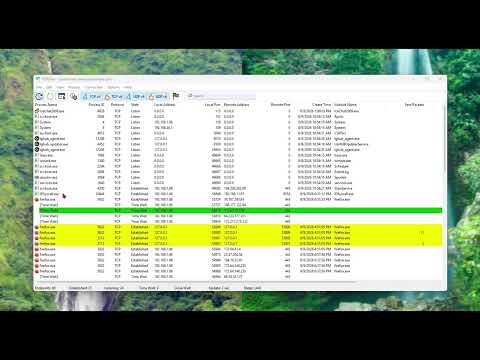
DFIR Triage against Indirect Syscall C2 Loader
Detailing a somewhat simple DFIR triage against a somewha complex loader (AV undetected)
Saturday, August 8, 2026
MITRE T1053.005 vs Wazuh SIEM
Just a little SOC emulation, Wazuh standard ruleset against MITRE T1053.005
Sunday, August 2, 2026
Saturday, August 1, 2026
File Integrity with Wazuh SIEM
This week we quickly look at Wazuh SIEM file integrity capabilities and how to extend its detections
Thanks 4 watching :)
Sunday, July 26, 2026
Chainsaw for Windows Event Logs Threat Hunting
Thursday, January 18, 2024
HTML Smuggling for Data Infiltration
Hello and happy new year! Today in this short blogpost we will be looking at a very simple but effective attack called HTML Smuggling. Briefly put this technique abuses HTML5 and JavaScript functions to infilitrate or exfiltrate data across and out of the network. This would also be classified as more of a phishing attack as it would rely on human interaction if you were looking for initial access or something similar.

Jumping right in we see the HTML and JavaScript code necessary to make this work (credit to ired.team & outflank.nl), we can see it loads our file in base64 into an array, goes through a few other initializations, and has it eventually downloaded onto the victim's machine through the browser. (Note the 2 variables that need to be replaced for your own testing)
To get the base64 of our target PE we need to simply run the command below:

Once we have initialized that variable with our base64 output our HTML file is ready to be hosted on a webserver and sent to our victim as an HTML link. Also you will need to have the executable file you encoded in the same directory as the HTML file you are hosting on the server.
To start up a simple HTTP server to host locally use the following command:

Once the victim browsers to the server the file will automatically be downloaded to the victims machine as seen in the picture below:

:LINKS:
https://www.ired.team/offensive-security/defense-evasion/file-smuggling-with-html-and-javascript
Gemini Security - Understanding HTML Smuggling (VIDEO)
https://micahbabinski.medium.com/html-smuggling-detection-5adefebb6841
Wednesday, November 8, 2023
Intro to Timeroasting - A New Attack Against the Network Time Protocol (NTP)
Today we will be shortly covering a tool called "Timeroast" by SecuraBV which takes advantage of the Network Time Protocol (NTP) in Active Directory environments. This protocol is utilized when a system needs to synchronize its clock to the domain controller and has since been secured due to MiTM attacks in the past against the protocol and systems clock's. This more 'secure' feature is exactly what we'll be taking advantage of with this tool. Now although timeroasting is what you would consider a low probability attack, it is also a low effort attack which can be run in the background as further testing is continued. Let's go ahead and cover some more of the features and details of the tool and protocol.
In short, the secured version of NTP protocol includes the RID of the computer account in the NTP request and the server adds a response that uses the NTLM hash of the requesting computer account password and uses that as a key for encrypted protocol communication. Using Timeroast we are able to capture these hashes as their being communicated and potentially crack them offline with a Kali machine NOT directly connected to the domain! Also the tool also comes with a password cracker written in Python which is very handy in our case as these hash types are not supported by Hashcat and there are hashing issues with John as well.
Just quickly going into one downside to this attack is that the actual computer names are not included, only the RIDs assigned to them when the NTP hashes are captured. While it is possible to match RIDs to computer names we won't be covering that in this post (some quick ideas would be Kerberoasting as a potential way to gather usernames of the domain). Below you can see that hashes are dumped but no usernames are included, just the corresponding RID #s.
 |
| Gathering NTP hashes with timeroast.py |
Also certain systems were currently not requesting time synchronization with the domain controller at the time of running the tool, so each time you run timeroast.py you seem to gather some already captured hashes and some new hashes. You could continue to run this tool until you feel like you have exhausted the list of users, or possibly you are already aware of the # of existing users in the domain and could continue to capture hashes until you reached that amount matching the # of users.
 |
| Managing to crack a hash with timecrack.py |
With one of the passwords actually being recovered here using a simple wordlist with the included tool timecrack.py we can see that this does attack does indeed show some promise against gathering and cracking valid network credentials. Still not knowing the username this password matches to, we could potentially password spray these found credentials across the domain, or go another route and try and match it with an already known username we may be more sure it belongs to. The choice is up to your personal skillset and creativity on how exactly you could use these credentials to gain further access.
Happy hacking! :)
:LINKS:
https://www.secura.com/uploads/whitepapers/Secura-WP-Timeroasting-v3.pdf
https://github.com/SecuraBV/Timeroast
Subscribe to:
Posts (Atom)
-
 Today we will be shortly covering a tool called " Timeroast " by SecuraBV which takes advantage of the Network Time Protocol (NTP)...
 -
 EDRs are constantly evolving with the cat-mouse nature of threats evolving and threat actors are becoming more cognizant of detection method...
 -
 In this technique we will be going over how to have our payloads downloaded via HTTP and then being loaded directly into memory. This woul...